

Polyaspartic Pool Deck Coating: Choosing Texture for Wet Bare Feet
A polyaspartic pool deck coating needs an appropriate surface texture; the resin name alone does not tell you how it will feel or grip under wet bare feet. Around a pool, the right finish balances traction, comfort, cleaning, and drainage. A glossy showroom sample cannot answer those questions by itself, particularly when the real deck will collect splashes, sunscreen, and fine dirt.
Contents
A polyaspartic pool deck coating needs an appropriate surface texture; the resin name alone does not tell you how it will feel or grip under wet bare feet. Around a pool, the right finish balances traction, comfort, cleaning, and drainage. A glossy showroom sample cannot answer those questions by itself, particularly when the real deck will collect splashes, sunscreen, and fine dirt.
Start with the area people actually use. A narrow path beside the pool, a shaded step, and a sunny seating space may experience different conditions. The finish should work where someone climbs out dripping wet as well as where a lounger normally stands. A coating that looks attractive across a dry display board may need a different texture arrangement for those situations.
Why the smooth sample is only the beginning
Polyaspartic describes a coating technology, rather than a particular slip-resistant finish. Texture may come from aggregate and the way the coating layers are installed. The amount and size of that texture, its distribution, and how much is covered by the final resin layer all affect the surface people touch.
A sample with decorative flakes may look rough while its clear topcoat fills much of the texture. Another sample may appear almost plain yet have a deliberate fine aggregate profile. Judging by appearance alone can therefore be misleading. Ask to see the actual proposed finish, including all topcoats, rather than an intermediate decorative stage.
Sika’s Sikalastic-701 SF product information is one example in which a polyaspartic topcoat has separate instructions for areas requiring slip resistance. Its recipe belongs to that specific system. The broader point is that texture is an intentional system detail, not an automatic consequence of choosing polyaspartic.
Think about the moment someone leaves the water
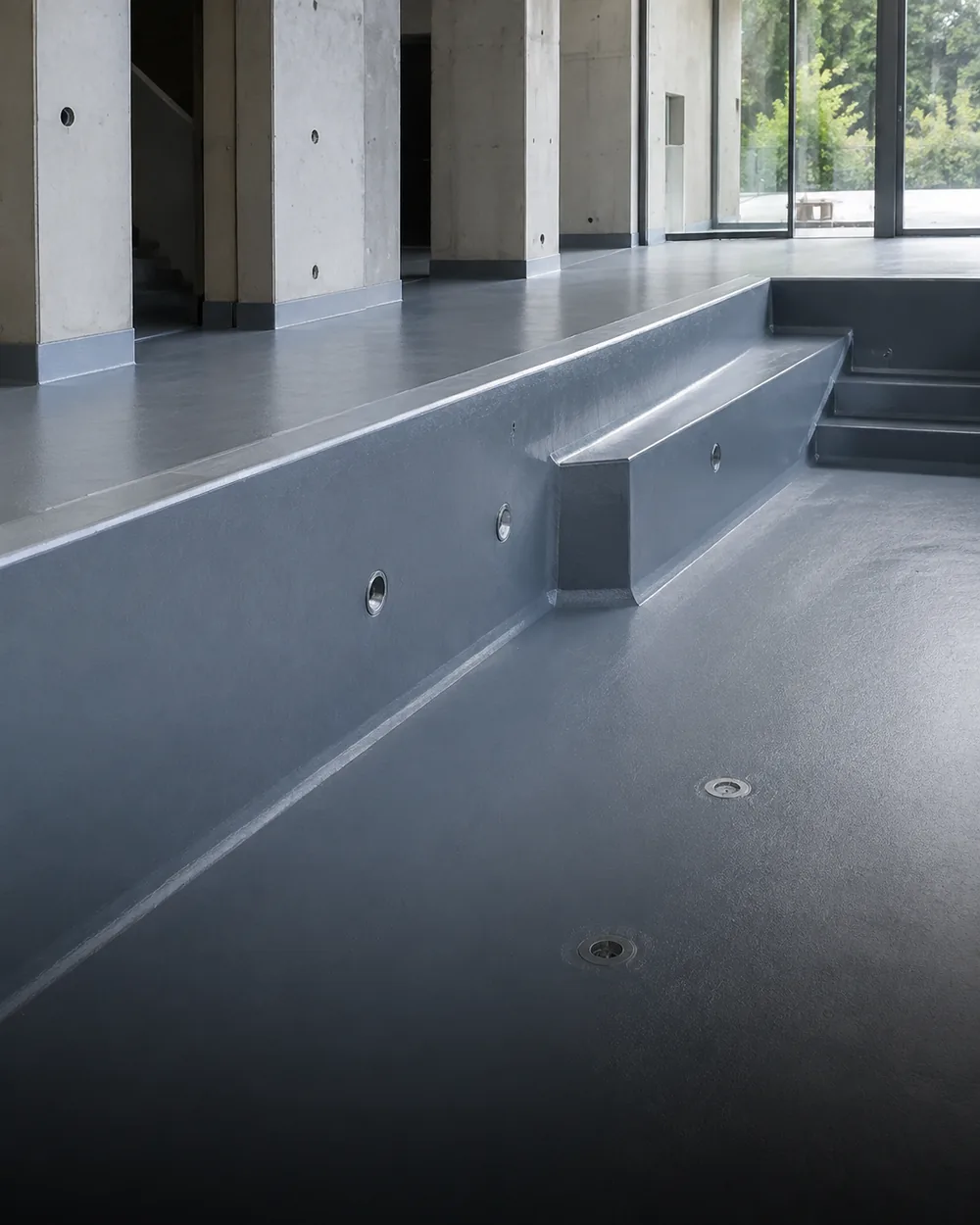
The first steps out of the pool combine wet skin, moving water, and a change in level. Handrails and steps may concentrate traffic into a small area. Water carried onto the deck can reach farther than the obvious splash line, especially where several people repeatedly use the same route.
Observe where feet land, where people turn, and where water remains after swimming. Those locations deserve particular attention during design and later inspection. A consistent finish across the deck is easier to understand than unexpected patches with sharply different grip. Sudden changes can catch people out even when each patch seems reasonable on its own.
Poolside safety also depends on behaviour and supervision. No coating makes running or horseplay safe. A suitable finish is one part of the setting, alongside drainage, lighting, clear routes, and how the area is used. Keeping those elements in view prevents a surface claim from being mistaken for a complete safety promise.
More roughness is not always more usable
A very coarse texture can feel uncomfortable on bare feet, particularly at steps where people pause or shift their weight. It may also scrape skin during an accidental fall. That does not mean a smooth surface is preferable. It means the texture should be selected for barefoot use and assessed as a finished surface.
The most useful sample is large enough to experience a normal step and turn under controlled conditions. It should represent the actual installation, including any sealer or topcoat. Where formal slip assessment is needed, use the relevant method and a competent assessor rather than improvising a risky wet walking demonstration.
Comfort also changes with the user’s needs. Children, older adults, and people with limited balance may experience the same deck differently. The aim is a manageable, consistent surface that suits the users, not the most aggressive texture available. Accessibility requirements should be considered with the full route, including transitions and steps.
Compare the conditions that change grip
| Deck condition | What a dry sample may miss | Practical design or maintenance response |
|---|---|---|
| Fresh pool splashes | Water film during repeated use | Assess the finish for the expected wet condition |
| Sunscreen near seating | An oily residue on top of the texture | Use a compatible cleaning method before build-up becomes established |
| Shaded corners | Slow drying and biological growth | Improve drainage access and inspect these areas separately |
| Windblown grit | Loose particles moving between feet and coating | Sweep or rinse using the permitted routine |
| Drain approach | Water collecting at a low point | Resolve falls and outlet details before selecting decorative colour |
| Worn step edge | Local loss of profile where traffic concentrates | Inspect and repair with a compatible finish |
A useful inspection does not ask only whether the entire deck looks clean. It asks which areas become slippery first and why. A shaded patch behind a chair may need a different cleaning frequency from an open sunny route. A predictable routine can address that difference without changing the coating everywhere.
Drainage helps the finish do its job
Texture cannot compensate for a deck that consistently holds water. Standing water prolongs the time the surface stays wet and can conceal small debris. If water collects at a step or doorway, the route itself may need correction before recoating. Applying another uniform layer generally does not correct the underlying fall.
Water should leave the deck through intended routes without creating troublesome cross-flows. Pool surrounds can include drains, coping, joints, and adjacent landscaping, and each affects the path. Leaves and soil washed from planting beds can quickly undermine an otherwise sensible arrangement.
Watch the area after normal use as well as after rain. Splash water may collect in a different pattern from a heavy shower. That observation gives a practical brief for repair: identify the puddle, trace the route that feeds it, and determine whether an outlet is blocked or the surface shape is wrong.
Cleanability belongs in the texture decision
A finish that needs a cleaning method you cannot realistically maintain is a poor match, even if its sample initially performs well. Coarse profiles can hold residues. A very delicate decorative finish may require more care around furniture and cleaning equipment. Ask what ordinary cleaning involves and how to remove the likely poolside contaminants.
Use the product’s permitted cleaner and dilution. Avoid assuming a strong household chemical will be harmless because the coating is described as chemical resistant. Chemical resistance is specific to substances, concentrations, exposure times, and curing conditions. A concentrated spill is different from occasional properly diluted cleaning.
Rinse in the intended direction without pushing contamination back into the pool. Be thoughtful about pressure washing: force concentrated at a weak edge can create damage, and an aggressive method may not be approved. Cleaning should remove dirt without gradually eroding the surface profile or leaving a slippery residue of its own.
A splash-zone finish is not a pool lining
The deck and the inside of the pool have different exposure. A deck receives intermittent wetting and drying. A pool lining may remain submerged in treated water for long periods. A product suitable for one should not be assumed suitable for the other, even if both descriptions use the word waterproof.
Likewise, a decorative topcoat may need another layer to provide the required waterproofing. Identify which product performs each function before work begins. The Huacheng Polyurea Top Coating page can help start a discussion about protective finishes, but any specific poolside build-up still needs confirmation for its actual exposure and use.
The CDC Model Aquatic Health Code treats public aquatic facilities as complete environments. Its guidance is useful context for understanding why deck surfaces, cleaning, and other operational details matter together. Local requirements and the intended type of pool should guide any formal compliance assessment.
Allow the whole finish to cure before reopening
Fast-curing coating technology can be useful, but reopening a pool area involves more than deciding whether the surface feels dry. The complete layer system must reach the required state for wet use, cleaning, furniture, and normal traffic. Weather and substrate conditions can alter that timetable.
Protect the area from early contamination during curing. Windblown leaves, sprinkler water, and people crossing the deck can spoil the finished texture or surface continuity. Plan a clear route around the work so nobody has to step onto a freshly coated section to reach a door or pool control.
If different areas are completed on different days, keep those dates clear. A nearby finished patch does not establish that the newest area is ready. Record when each area can return to its intended use, and let that guidance determine reopening rather than the pressure to use the pool that afternoon.
Keep the selected texture working over time
Wear is rarely evenly distributed. The ladder exit, a narrow gate, and the path to the shower may change faster than a quiet seating corner. Periodic inspection should look for polished areas, loose edges, damaged texture, and persistent dirt. Early local repair may be easier than waiting until the entire deck needs attention.
Retain the finish description and a small approved sample where practical. They help a future repair match the existing texture and avoid introducing a noticeably different patch. If a repair requires an additional sealer, confirm that it will preserve the intended grip rather than smoothing the surface into a glossy island.
The useful choice of polyaspartic pool deck coating is the one that works as an installed surface in real poolside conditions. Define the wet use, judge a representative texture, resolve drainage, and choose a cleaning routine that people can follow. Those decisions matter more than a general claim that one resin is non-slip.
Share how your pool surround is used, where water collects, and the texture you prefer with Huacheng to discuss an appropriate surface system and representative sample.
Frequently asked questions
Is every polyaspartic pool deck coating slip resistant?
No. Slip behaviour depends on the finished profile, contaminants, wet conditions, wear, and the assessment method. Confirm the exact proposed finish for the intended poolside use rather than relying on the resin name.
Can decorative flakes replace grip aggregate?
Decorative flakes change appearance and may influence profile, but they do not automatically provide the required wet traction. The finished topcoat and specified texture arrangement must be evaluated together.
Should pool steps have the roughest possible finish?
Steps need an appropriate, consistent surface that works with barefoot use and the overall access design. Excessive roughness can be uncomfortable. Select the detail using the intended users and applicable assessment requirements.
Will a clear sealer make the deck easier to clean?
It might change cleanability, but it can also fill texture or alter wet grip. Only use a compatible sealer approved within the system, with its effect on the final surface considered before application.
Can the same coating continue down into the pool?
Only if the complete system is specifically suitable for that submerged exposure. Intermittent splashes on a deck and continuous contact with treated pool water are different conditions.