

How Radiative Cooling Materials Help Manage Heat on Roofs and Outdoor Equipment
A practical guide to selecting radiative cooling film, coating and sunshading fabric for exposed roofs, equipment enclosures and thermal-management projects.
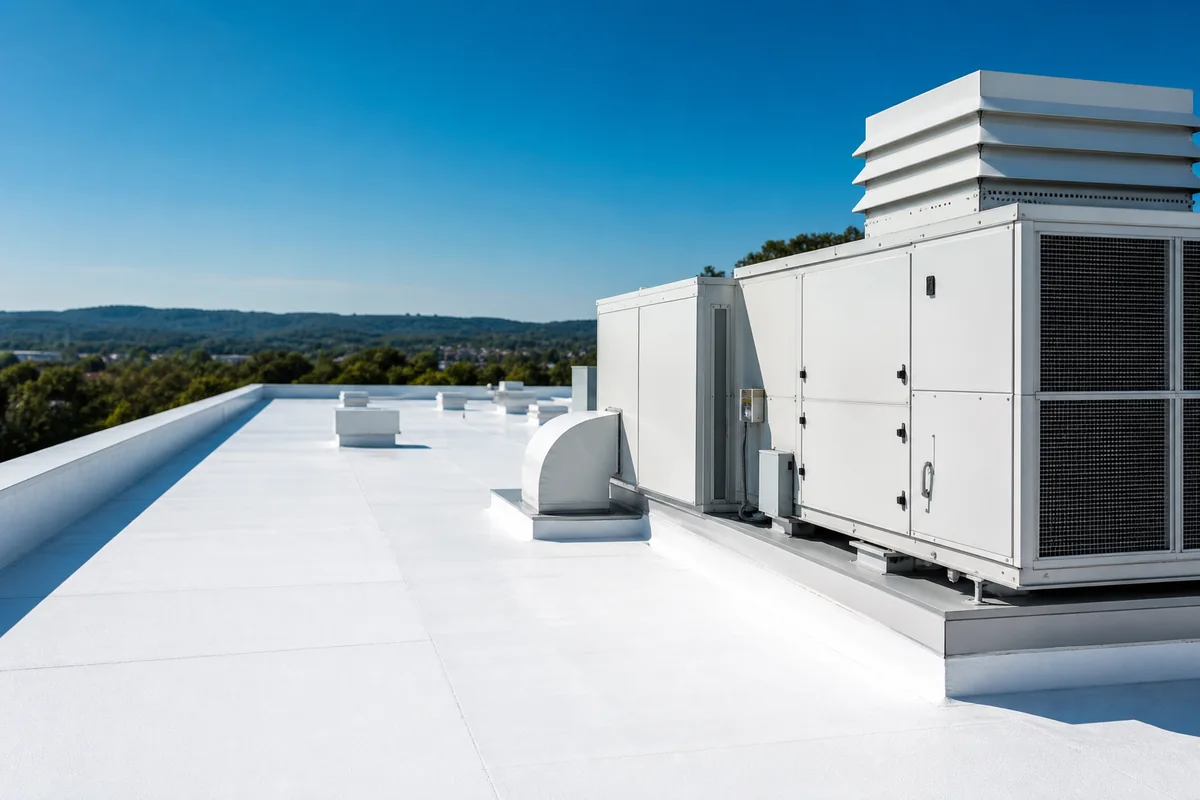
Surfaces exposed to the sun continuously absorb solar energy. Roof membranes, metal enclosures and outdoor equipment can therefore become considerably warmer than the surrounding air, increasing heat transfer into the protected space. Radiative cooling materials are designed to address this load passively by combining high solar reflectance with strong thermal radiation in the atmospheric window.
The principle: reflect incoming energy and release heat
A useful passive-cooling surface performs two jobs at the same time. First, it reflects a large proportion of incoming sunlight instead of converting it into heat. Second, it emits thermal energy toward the sky. The balance between these two functions, together with local weather, substrate condition and installation quality, determines the result in a real project.
This is why product selection should not rely on one isolated number. Solar reflectance, infrared emissivity, film or coating thickness, adhesion, weather resistance and the geometry of the installation all need to be considered as a system.
Choosing the right product form
- Radiative cooling film is suited to projects that benefit from a consistent factory-made surface and controlled lamination or attachment.
- Radiative cooling coating can adapt to complex roof shapes, equipment housings and large surfaces where an applied finish is more practical.
- Radiative cooling sunshading fabric can add solar control to lightweight shading structures while retaining the flexibility of a textile format.
- Window insulation film addresses solar gain through glazing and should be evaluated together with visible-light and installation requirements.
A project-first evaluation process
Begin by documenting the substrate, orientation, operating temperature, climate, exposure to water or chemicals, required service life and maintenance access. Next, compare the product format with the installation method available on site. Samples or a small mock-up can help confirm surface appearance, adhesion and workmanship before a larger application.
The best material choice starts with the application environment, not with a generic product ranking.
Huacheng supplies multiple radiative cooling formats so project teams can match thermal-management goals with construction conditions. Technical discussions can include the target surface, installation sequence and the product data needed for project review.