

Aerogel Battery Insulation: Why a Heat Barrier Is Not a Cooler
Aerogel battery insulation can slow heat crossing a selected boundary. It does not remove the heat a working battery produces. A battery system may therefore use an insulating barrier in one location and a cooling path in another. The two features have different jobs and can be designed to work together.
محتويات
Aerogel battery insulation can slow heat crossing a selected boundary. It does not remove the heat a working battery produces. A battery system may therefore use an insulating barrier in one location and a cooling path in another. The two features have different jobs and can be designed to work together.
This is the key to reading headlines about aerogel and electric vehicles. “Keeps heat out,” “limits heat reaching a neighboring cell” and “cools the battery during charging” describe different outcomes. A material that helps with one does not automatically deliver all three.
Start with where the heat comes from
A battery exchanges energy as it charges and supplies power, and some energy becomes heat inside the cells. That internal heat is a different source from hot surroundings, sunshine on an enclosure or a nearby hot component. Understanding the source helps explain why one barrier cannot answer every temperature problem.
Imagine a closed insulated box containing a warm object that keeps producing heat. Insulation can slow heat entering from outside, but it can also slow heat leaving from inside. Whether that helps depends on the temperatures and on the other heat-transfer paths provided.
This is a teaching picture, not a proposal to enclose a battery yourself. A finished battery pack has a defined arrangement of cells, sensors, electrical connections and thermal features. Changing that arrangement changes the question from understanding a material to modifying a complete system.
A cooler needs somewhere for the heat to go

Cooling means transferring heat away from the part you want to keep within its operating range. In different systems, heat may be carried by moving air, a circulating liquid or another designed path. The equipment and control strategy depend on the battery and its use.
An insulating barrier does the opposite at the boundary where it is placed: it makes heat transfer more difficult. That can be useful when the objective is to protect one region from another. It does not act as a pump carrying energy out of the pack.
The Department of Energy’s thermal control and system integration overview describes thermal management as a system-level topic. That is a helpful starting point for readers: the temperature outcome belongs to the system, rather than to one material mentioned in its description.
Follow the intended route, not just the material
Suppose a conceptual battery module has a path leading from the cells toward a cooling plate and a separate barrier between neighboring regions. Heat is intended to cross one boundary relatively easily and another less easily. There is no contradiction in those opposite choices.
What would be contradictory is assuming the same placement is suitable everywhere. A barrier added across an intended cooling contact could obstruct heat removal. A highly conductive connection across a boundary intended to isolate heat could weaken that isolation. Location gives the property its function.
For a nontechnical reader, a diagram with arrows is often more informative than a list of impressive properties. Ask which arrow is being reduced and which arrow carries heat away. If neither route is shown, “advanced thermal material” remains an incomplete explanation.
Slowing transfer can create time, not erase energy
Thermal barriers are sometimes discussed in relation to delaying heat reaching an adjacent cell during an abnormal event. Delay is a time-related outcome. It should not be casually rewritten as complete prevention of every consequence or permanent containment of all energy.
Any meaningful delay claim needs a defined test, specimen and outcome. The conditions of the initiating event, the spacing, the enclosure and the other components affect what the result describes. A material’s thermal conductivity alone cannot supply the duration for a complete pack.
UL Solutions’ explanation of thermal runaway describes an event involving heat and released material as well as potential spread between cells. It is not a certification of a Huacheng aerogel product or a basis for assigning one an untested protection time.
Normal use and an abnormal event are separate tests
A battery’s normal temperature control has to accommodate its ordinary operating conditions. A thermal safety assessment asks other questions about defined abnormal events. Strong evidence in one category does not mean every question in the other category has been answered.
For instance, a barrier may be studied for reducing heat transfer between cells, while the ordinary cooling system remains responsible for managing charging heat. A report about the barrier should not be presented as a measured improvement in charging speed or vehicle range unless those outcomes were also evaluated.
| Phrase in an article | Narrow question it raises | Claim that needs separate evidence |
|---|---|---|
| Thermal insulation between cells | How much heat crosses that boundary? | Cooling performance of the whole pack |
| Improved heat removal | Where does the heat go and under what load? | Protection during every abnormal event |
| Delayed propagation in a test | What event and time criterion were evaluated? | Universal prevention of propagation |
| Low material conductivity | Which sample and conditions produced the value? | A vehicle-level range or charging benefit |
| High service-temperature capability | What product and exposure limit apply? | Complete battery-pack safety certification |
The table is a way to read claims carefully. It does not rank battery designs. A design can address several of these questions, but each stated outcome needs its own relevant support.
A powder is not a finished cell barrier
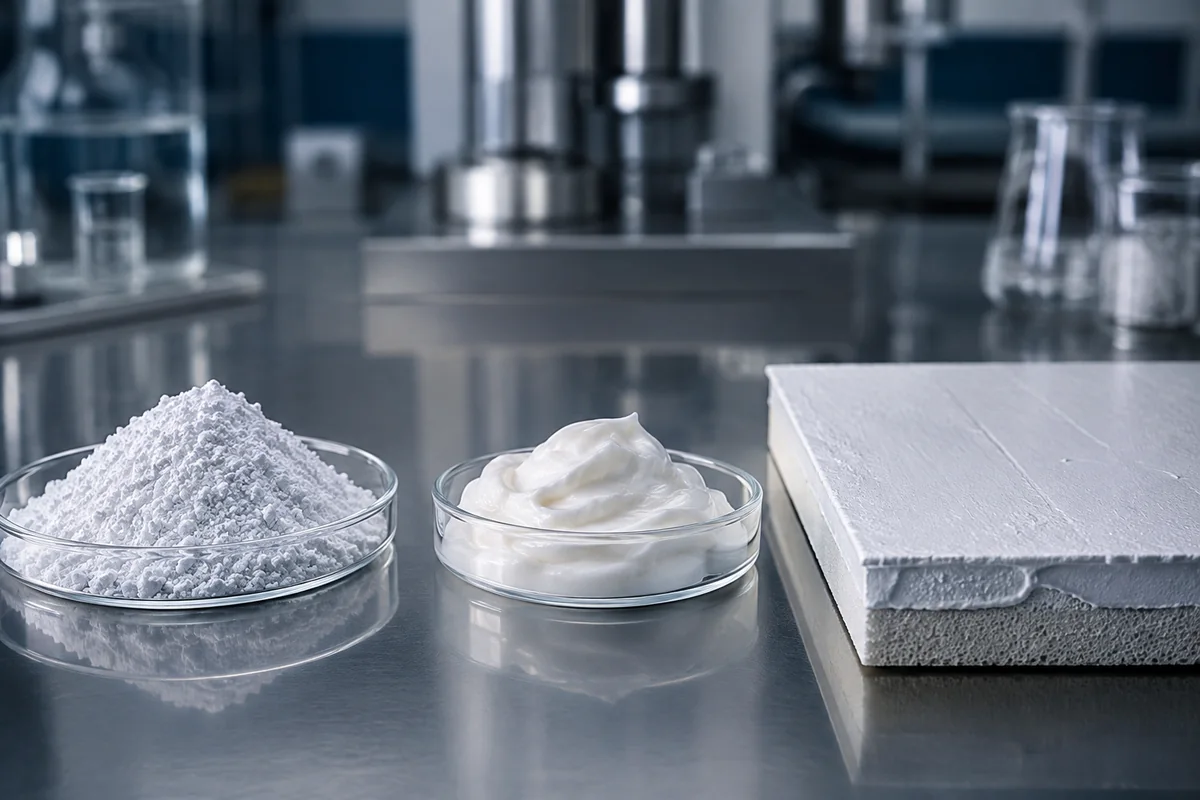
Aerogel powder can be an ingredient in a composite. The finished barrier may also contain fibers, binder, protective layers or other components that provide shape and handling characteristics. Those parts influence the product that is actually installed.
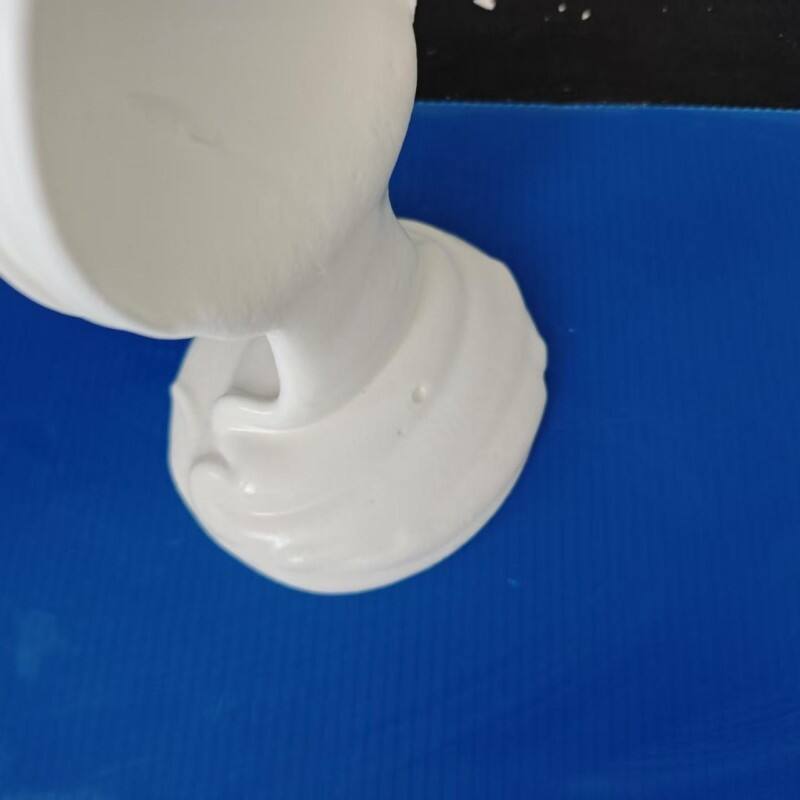
Likewise, an aerogel paste or coating is not automatically interchangeable with a thin sheet in a battery module. Its cured thickness, mechanical condition, electrical behavior and compatibility with surrounding components would be part of the application question. A shared ingredient does not establish equivalence.
Huacheng’s aerogel product pages distinguish powder, paste and coating. That range should not be read as a claim that each product is a validated battery barrier. A battery-related application needs evidence for the particular finished material and design.
Keep electrical and thermal properties separate
Thermal insulation concerns heat transfer. Electrical insulation concerns resistance to unwanted electrical conduction under defined conditions. The everyday word insulation can refer to either, which makes it easy to assume a thermal product has established electrical suitability.
That assumption is unsafe as a way to read a product description. A low thermal conductivity number says nothing by itself about dielectric performance, electrical clearances or the effect of contamination. Those are different properties with their own test conditions.
The finished product also matters here. An ingredient and a composite may differ, and a result for a dry specimen may not describe every exposure condition. Keep the named property beside the number instead of collecting several unrelated meanings under one insulation label.
What a vehicle owner can usefully take from this
For an owner, the presence of aerogel in a technical description is background information about the design. It is not an instruction to add a layer to a battery, cover a vent or alter a charging system. The manufacturer has defined how the finished product should be used and serviced.
If an article claims a benefit, look for the scale of the evidence. Was a material measured, a module tested or a complete vehicle evaluated? A small-sample result can be useful research while remaining several steps away from an owner-level outcome such as range in hot weather.
Ordinary observations also need context. A vehicle running a fan or cooling pump while charging does not mean an insulating barrier has failed. It may be the designed cooling system performing its separate task. Use the vehicle’s own guidance for messages or unusual behavior rather than diagnosing its internal materials from a headline.
Read the next battery-material headline in three steps
First identify the job: restricting heat entering, restricting heat between regions or removing internally generated heat. Second identify the specimen: ingredient, finished barrier, module or complete pack. Third identify the measured result and its conditions.
These steps reveal when a claim changes scale without evidence. “A sample transferred less heat” is not the same statement as “every vehicle will charge faster.” Both may be discussed in one article, but a logical connection needs to be demonstrated rather than supplied by enthusiastic wording.
Aerogel battery insulation makes most sense as one part of a designed thermal arrangement. It can make selected heat paths harder to cross while another path carries heat away. Remembering those arrows gives a clearer understanding than treating insulation as a source of cold.
If you are discussing an aerogel application with Huacheng, identify the heat path and the finished form under consideration. That gives the material question a clear scope before any system-level claims are considered.
الأسئلة المتداولة
Does aerogel actively cool a battery?
An insulating aerogel layer slows heat transfer through the boundary where it is used. It does not actively pump heat away. A battery may have a separate cooling arrangement designed to remove internally generated heat.
Can insulation help in both hot and cold surroundings?
Slowing heat exchange can be useful in different environments, but the result depends on internal heat generation and the complete thermal design. It is not a reason to add material to a finished battery yourself.
Does a delay in one test mean thermal propagation is impossible?
No. A delay result belongs to its defined test conditions and criteria. It should not be expanded into a universal prevention claim for different cells, enclosures or events without relevant evidence.
Is a low-conductivity powder equivalent to a battery barrier sheet?
No equivalence follows from that number alone. A finished sheet includes its complete construction and needs properties suited to its role. Its testing and installation context differ from an ingredient sample.
Does thermal insulation also prove electrical insulation?
Those are separate properties. Evidence about heat transfer does not establish dielectric performance or suitability near electrical connections. Read the exact finished-product evidence for each claimed property.