

Polyurethane Waterproof Coating for Concrete: Can the Slab Be Damp?
A polyurethane waterproof coating for concrete should only be applied when the concrete meets that exact product's moisture requirements. Moisture-cured does not mean suitable for wet concrete, and a surface that looks pale and dry may still contain moisture below it. Establish where the water comes from and how the chosen system measures readiness before coating a damp slab.
Contents
A polyurethane waterproof coating for concrete should only be applied when the concrete meets that exact product’s moisture requirements. Moisture-cured does not mean suitable for wet concrete, and a surface that looks pale and dry may still contain moisture below it. Establish where the water comes from and how the chosen system measures readiness before coating a damp slab.
This is especially relevant after washing a terrace, completing concrete repairs, or uncovering a floor that has been hidden beneath an old finish. The top may dry quickly in moving air while deeper material stays damp. Covering it too soon can create adhesion or curing problems, and a waterproof layer above does not necessarily solve moisture entering from below.
Moisture curing and wet-surface tolerance are different
Some polyurethane products use atmospheric moisture as part of their curing process. That chemistry describes how the material reacts under its permitted application conditions. It does not grant general permission to apply it over standing water, a saturated slab, or condensation.
The distinction can be confusing because the word moisture appears in both descriptions. Think of the difference between the conditions needed for a product to cure and the conditions required for it to bond to concrete. Both must be suitable at the same time. A material can need moisture from the air while still requiring a suitably dry substrate.
Sika’s Sikalastic-320 NS information is a product-specific example that combines moisture-cured chemistry with concrete moisture assessment. Its limits should not be borrowed for another coating. It demonstrates why the full application instructions matter more than a short chemistry description on a label.
Work out why the slab is wet

Recent rain or cleaning can wet the surface from above. New concrete and repair mortar may contain construction moisture. Water can also arrive through a leak, from adjacent soil, or as vapour through the assembly. These sources have different implications, so waiting for one sunny afternoon is not a universal remedy.
Notice the pattern. A damp patch beside a pipe differs from widespread darkening after rain. Moisture returning repeatedly at a perimeter may have a continuing source. A floor that becomes damp while the room air is humid may involve surface condensation. Observations guide the investigation, but they do not replace the selected coating’s required measurements.
If water actively enters through the slab or wall, address that pathway before treating the surface as a routine coating job. A membrane installed on the wrong side of a continuing water pressure problem may be unsuitable. The answer may involve drainage, leak repair, or a different waterproofing arrangement rather than a faster-drying top surface.
The four meanings of dry
| Description people use | What it actually tells you | What it does not establish |
|---|---|---|
| Dry to the eye | No obvious surface water at that moment | Moisture deeper in the concrete |
| Dry to the touch | The contacted surface does not feel wet | Readiness under a coating’s specified test |
| Old concrete | Time has passed since placement | Freedom from later water ingress or rising moisture |
| Within the product’s moisture requirement | A defined measurement meets a defined condition | That all other preparation and weather conditions are suitable |
The last row is the useful coating decision. A result should identify the method, location, conditions, and relevant product limit. Without those details, a statement that the floor tested dry can be difficult to interpret and impossible to compare later.
A moisture number needs its test method
Different instruments and methods assess different aspects of moisture. A surface-reading device, an in-slab relative-humidity method, and a qualitative observation are not interchangeable simply because they all concern dampness. Use the method required by the chosen system and interpret it according to that method.
Do not transfer a numerical limit from one manufacturer’s instructions to another product. Even numbers that look similar may refer to different measurement bases. A percentage without a named test can conceal a substantial misunderstanding. If two documents disagree, resolve the system requirement before coating rather than averaging the figures.
Test locations should represent the actual area, including suspicious patches, recently repaired zones, and places that dry slowly. A single convenient reading by an open doorway may not describe the middle of the room or a shaded corner. Keep the results with photos so later changes can be understood in context.
Weather can put water back on a dry surface
A substrate can meet the moisture requirement and still become unsuitable if condensation forms before application. Surface temperature, air temperature, humidity, and their relationship to dew point matter. Cool concrete can collect moisture even when the surrounding room seems comfortably warm.
Outdoor work also faces rain, overnight dew, and water from irrigation or adjacent cleaning. Protecting a prepared surface is part of keeping it ready. A clean slab that is rewetted or covered in dust may need reassessment before the first coating layer.
Use the product’s permitted temperature and dew-point conditions for application and curing. Avoid an improvised rule that midday is always safest or early morning is always best. Actual conditions vary with location, shade, wind, and the slab’s temperature history. Record what applies on the day rather than relying on a general weather forecast alone.
A primer cannot be assumed to solve every damp slab
Primers can serve different purposes: improving bond, reducing suction, or preparing a particular substrate. Some systems include specialised moisture-management products. Those roles must be stated explicitly. Calling something a primer does not establish that it is suitable over ongoing moisture transmission.
A compatible primer also has its own preparation, thickness, curing, and recoat requirements. Applying it over dust or weak concrete does not strengthen the bond beneath that weak layer. Using an unrelated product because it is described as damp tolerant may create a new compatibility problem with the waterproof coating above.
Discuss the complete sequence when moisture is a concern. The answer should identify what moisture condition is permitted, how it is verified, and what each layer does. A vague instruction to seal it first leaves the most important questions unresolved.
Drying must reach repairs and hidden low points
A recently patched corner can remain different from the older slab around it. The repair material needs to be compatible with the coating and ready for the next stage. Its age, thickness, curing method, and exposure affect that decision. A thin-looking repair viewed from above may be deeper than expected.
Low spots, wall bases, and areas beneath removed equipment can dry slowly. Cleaning water may remain in joints or small recesses even after the open surface changes colour. These details deserve inspection before coating because the film can conceal them quickly.
Plan drying and protection as a practical sequence. Keep water sources away, maintain suitable environmental conditions, and reassess rather than assuming a fixed waiting period works for every slab. Forced drying or local heating should follow an appropriate plan; concentrating heat on one patch can create uneven conditions without resolving the underlying source.
Know when waiting is not the solution
If moisture returns despite a suitable dry period, investigate the source. A leaking service, poor external drainage, failed water barrier beneath a floor, or another continuing pathway will not disappear because the coating schedule has become urgent. The repeated pattern is useful evidence that the problem extends beyond surface drying.
Do not hide active movement, widespread deterioration, or uncertain structural cracking beneath an opaque film. Those conditions can interact with water and need assessment in their own right. The purpose of investigating is to choose a workable repair, not to add unnecessary complexity to a simple wet surface.
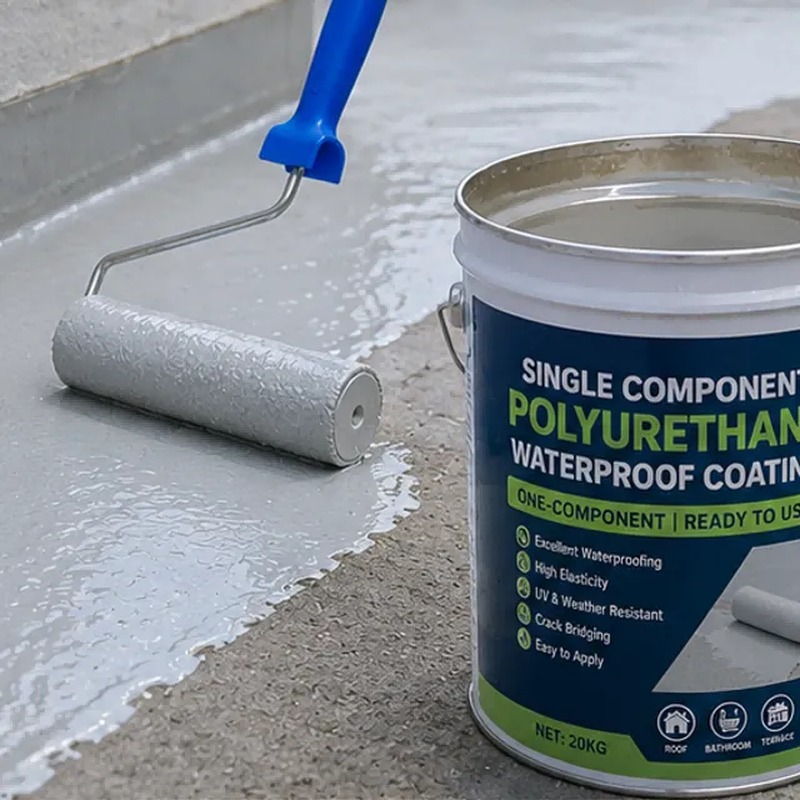
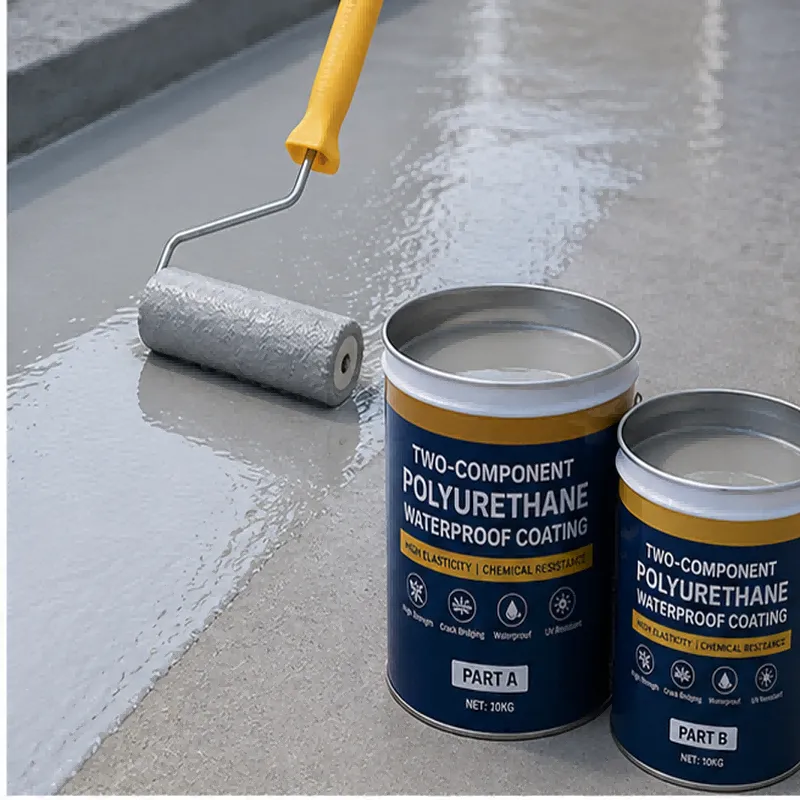
The Huacheng Two-Component PU Waterproof Coating page identifies one product format within the waterproofing range. When discussing concrete readiness, provide the age of the slab, the moisture source if known, and any test records. That allows the application conditions to be considered for the exact product instead of borrowing assumptions from another polyurethane.
Before the first coat, connect the evidence
A sensible readiness record brings together surface preparation, moisture measurements, weather or room conditions, repair readiness, and the intended layer sequence. None of those checks alone proves the whole slab is ready. Together they explain why coating can proceed under the chosen system’s requirements.
Make sure the accepted condition can be maintained long enough for application and curing. A slab assessed in dry weather may be rewetted overnight. A floor measured before a plumbing repair may change afterward. Readiness is connected to the actual working conditions, rather than a permanent certificate that never needs reconsideration.
Polyurethane waterproof coating for concrete works best when the substrate condition is understood before it is hidden. Use the product’s own moisture requirements, trace continuing water sources, and keep the measurements meaningful. That approach is more reliable than deciding by colour, touch, or the words moisture-cured alone.
Provide Huacheng with photos and any moisture-test details when considering a concrete coating, especially if the slab repeatedly becomes damp after it appears to dry.
Preguntas frecuentes
Can moisture-cured polyurethane go onto wet concrete?
Not automatically. Moisture-cured describes the curing chemistry. The product still has specific substrate moisture and application requirements, which may exclude wet or saturated concrete.
Is old concrete always dry enough to coat?
No. Old concrete can be rewetted by leaks, rain, groundwater, or other sources. Its current moisture condition matters more than age alone, and it should be assessed using the required method.
Can I copy a moisture percentage from another coating brand?
No. Limits belong to particular products and test methods. A number without its measurement basis can be misleading, even if it resembles a figure in another document.
Will a waterproof primer stop moisture rising through the slab?
Only a system specifically designed and suitable for that condition should be considered for it. Ordinary primer terminology does not establish resistance to continuing moisture transmission or water pressure.
Why is the patch repair darker than the surrounding slab?
It may contain more moisture or simply have a different composition and surface appearance. Colour alone cannot establish readiness. Check the repair material’s requirements and the coating system’s assessment method.