

Passive Radiative Cooling Film: What Changes When Clouds Arrive?
Clouds can change passive radiative cooling film performance in two directions at once. They can reduce incoming sunlight, so the surface receives less solar heat, while also changing the thermal radiation the surface exchanges with the sky. A cooler reading under cloud does not by itself show that the film is radiating heat away more effectively.
Contents
Clouds can change passive radiative cooling film performance in two directions at once. They can reduce incoming sunlight, so the surface receives less solar heat, while also changing the thermal radiation the surface exchanges with the sky. A cooler reading under cloud does not by itself show that the film is radiating heat away more effectively.
To understand a cloudy-day result, separate the surface’s solar heating from its net thermal heat loss. Then account for wind, moisture and the temperature of whatever supports the film. This is a useful way to interpret ordinary outdoor observations without expecting one clear-sky temperature difference to remain constant through every kind of weather.
A passing cloud changes the whole balance
Imagine a sunlit surface that cools when a large cloud passes overhead. Some of that change may occur because less sunlight reaches it. An untreated comparison surface may cool as well. Looking only at the treated surface hides how much of the response is a general weather change.
At the same time, the sky is part of the surface’s thermal surroundings. Clouds and atmospheric gases influence incoming and outgoing longwave radiation. Radiative cooling performance is therefore not determined by sunlight intensity alone, even if sunshine is the easiest thing to notice outdoors.
The Department of Energy’s explanation of atmospheric radiation describes both solar and thermal radiation and the influence of atmospheric conditions. That broad energy balance is the right starting point for interpreting why an exposed material behaves differently on different days.
Reflection and thermal emission do different jobs
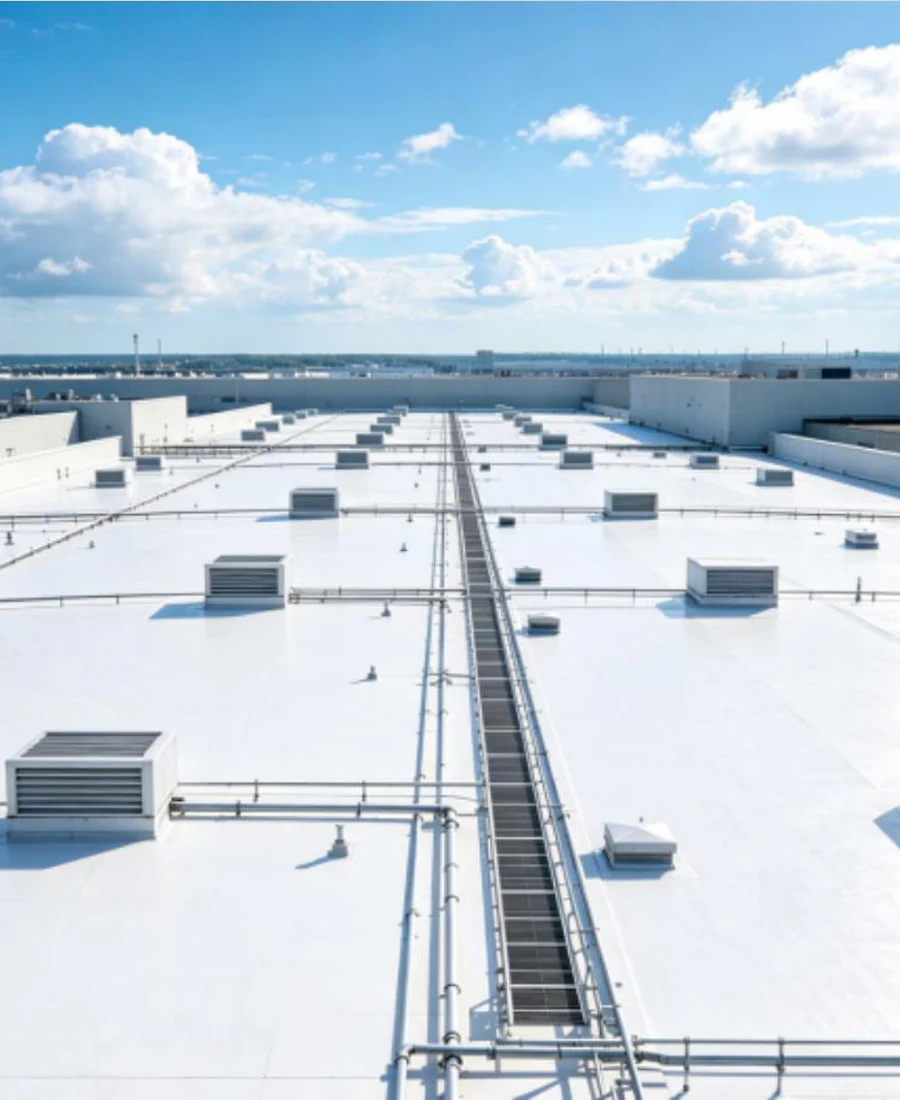
During daylight, a useful cooling surface generally needs to limit unwanted solar absorption while allowing heat to leave by thermal radiation. Reflecting more sunlight reduces one source of incoming energy. Emitting thermal radiation is a separate part of the process.
The visible color of a film does not fully describe either property. A white-looking surface can still differ from another white surface in its solar spectrum and infrared response. Likewise, being reflective to visible light does not establish the ability to emit heat at the wavelengths relevant to sky cooling.
Research on passive daytime radiative cooling demonstrates the importance of combining solar control and thermal emission in a specific experimental structure. Its measured result is not a temperature guarantee for every commercial film or every roof. The mechanism is transferable knowledge; the numerical outcome needs its own evidence.
Why the sky is not a constant cold background
People sometimes picture a surface radiating directly into empty space regardless of weather. The real atmosphere lies in between. Its gases, moisture and clouds affect which radiation passes through and which radiation the surface receives from above.
An atmospheric transparency region in the thermal infrared helps explain why sky-facing surfaces can lose heat effectively under favorable conditions. It should not be imagined as a physical hole that remains perfectly open in every location. Conditions along the path matter, and the same film can encounter different thermal surroundings over a single day.
This is also why air temperature is not enough to predict the result. Two afternoons with similar thermometer readings can have different cloud cover, humidity, wind and solar exposure. Matching only one weather number leaves several important influences uncontrolled.
Read cloudy conditions with the right questions
| Condition observed | What may be changing | What to record with temperature |
|---|---|---|
| Cloud crosses a bright sun | Incoming solar heating changes quickly | Timing and whether both surfaces are shaded |
| Uniform overcast develops | Solar and sky-radiation conditions both change | Duration and broad sky condition |
| Cloudy night replaces a clear night | Thermal surroundings overhead differ | Wind and air temperature as well as cloud |
| Rain wets the film | Wetting introduces additional processes | Whether the comparison surface is equally wet |
| Wind rises during a test | Heat exchange with air changes | Exposure and gust timing |
The table is a record of possible influences, not a forecast of a fixed outcome. Cloud types and atmospheric conditions vary. A local observation may be useful for that installation while still being too limited to support a general claim about all cloudy weather.
Nighttime removes sunlight but leaves other variables
After sunset, solar absorption no longer competes in the same way, which makes nighttime interesting for observing radiative effects. However, wind, incoming sky radiation and heat from the supporting structure remain. The surface is still part of an outdoor system rather than an isolated emitter.
A roof can release heat accumulated during the day. A film on that roof may receive heat from below while losing it above. A lightweight sample resting on insulation will have a different relationship with its support. Comparing those two arrangements without explanation confuses material behavior with the test setup.
Observe the trend over time rather than selecting one striking reading. The period just after sunset can differ from the period before dawn because stored heat, air temperature and sky conditions evolve. A nighttime photograph does not explain which stage was measured.
Wet film introduces another cooling mechanism
Water on an exposed surface can evaporate, carrying heat away under suitable conditions. If a film has just been rained on or deliberately wetted, its temperature cannot be interpreted as a dry radiative-cooling result without considering that additional process.
The comparison should face similar moisture conditions. A wet treated sample beside a dry reference can produce an impressive temperature difference for the wrong reason. Record rain, dew and any cleaning water used before the observation, including when the surfaces appeared dry again.
Do not spray water during a demonstration and then present the outcome as evidence that the material requires no other cooling process. A combined effect can be useful, but the description should say what happened. Clear reporting is more valuable than a larger unexplained number.
Set up a comparison that survives changing weather
Place comparable treated and reference surfaces under the same sky exposure and measure them at the same time. Keep their support, orientation and measurement method as similar as practical. A reference in a different part of the roof may encounter shade or wind the treated area does not.
Log the surrounding air temperature using a suitable shaded measurement rather than a thermometer left in direct sun. Surface temperature and air temperature answer different questions. A sun-heated air sensor can make an ordinary surface appear artificially impressive by comparison.
If you use infrared measurements, account for surface emissivity and reflected radiation. Different appearances in a thermal image do not automatically equal the same difference in true temperature. A measurement method appropriate for the surfaces is part of the comparison, not a detail to add after selecting the best image.
Distinguish a cooler surface from a cooler room
The film’s surface can respond quickly when sunlight changes, while indoor air and furnishings respond more slowly. Insulation, roof construction, ventilation and internal heat sources affect what occupants experience. A cloudy-day surface result does not establish a simultaneous room-temperature reduction.
If the goal is comfort, record a useful indoor outcome as well. Does the upper room become uncomfortable later, does a ceiling feel less warm, or does cooling equipment operate differently under comparable conditions? These observations should be described at their actual level of certainty.
Avoid promising that the whole building will be below outdoor air temperature because an exposed test sample achieved that condition. The building has many heat flows. A surface treatment can contribute to managing them without controlling every source or reproducing a protected laboratory arrangement.
Decide what evidence is useful for your climate
Ask for information that resembles the conditions you expect: the intended surface, supporting construction, weather record and time of day. A clear, dry test can demonstrate a mechanism, while a humid or cloudy site needs evidence about its own operating conditions.
Huacheng’s radiative cooling film can be discussed with those application details. Request a description of the measurement arrangement alongside any claimed temperature change. A result is much easier to judge when the reference surface, weather and sensor positions are known.
Weather dependence does not make a passive material useless. It means the result should be understood as a response to its surroundings. A credible expectation explains when the benefit is strongest, what remains uncertain and which building outcome matters to the person using the space.
Send Huacheng your application surface and typical weather conditions to discuss what a meaningful cooling-film comparison should measure at your site.
Frequently asked questions
Does passive radiative cooling film stop working under clouds?
Clouds alter both incoming sunlight and thermal exchange with the sky, so the outcome depends on the conditions and system. Avoid treating cloudy weather as a single on-or-off state. Compare measured results with an appropriate reference and weather record.
Why can the surface cool when a cloud blocks the sun?
Reduced incoming solar energy can lower its temperature, and a reference surface may cool for the same reason. That observation alone does not isolate radiative cooling. Look at simultaneous treated and reference measurements before attributing the change to one mechanism.
Is a clear night a better test than a sunny afternoon?
It tests a different balance because sunlight is absent. Nighttime observations can be informative, but wind, sky radiation and heat from the support still matter. A good test states its purpose rather than presenting one period as a complete description of all use conditions.
Can dew make a radiative cooling test misleading?
Surface water adds moisture-related effects, including possible evaporation. Record wetting and ensure reference conditions are comparable. A wet-surface result should not be presented as a dry-film result without accounting for the difference.
Will a below-air-temperature film make the whole room colder than outdoors?
That does not follow automatically. Indoor conditions also depend on the roof or wall assembly, ventilation, stored heat and internal sources. Surface temperature is one part of the system and must be connected to the actual room outcome through suitable evidence.