

Polyurea Price for a Small Patio: Why Area Alone Is Misleading
Polyurea price for a small patio depends on the work needed to create the finished surface, not simply the number of square metres multiplied by a resin rate. Removing an old finish, correcting weak concrete, treating joints, and working around steps can outweigh the cost of the coating itself. A higher price per unit of area on a small patio does not automatically mean the material is overpriced.
Contents
Polyurea price for a small patio depends on the work needed to create the finished surface, not simply the number of square metres multiplied by a resin rate. Removing an old finish, correcting weak concrete, treating joints, and working around steps can outweigh the cost of the coating itself. A higher price per unit of area on a small patio does not automatically mean the material is overpriced.
The useful comparison is between two descriptions of the same finished job. One figure may cover a decorative topcoat on prepared concrete; another may include removal, repairs, a waterproof layer, texture, and edge details. Until those differences are visible, comparing the headline prices can make the more complete proposal look expensive for the wrong reason.
Picture the work before calculating the rate
A patio coating project begins before anyone opens a container. The surface must be accessible, cleared, assessed, prepared, and protected from contamination. Equipment has to reach the space. Nearby walls, drains, glass, and planting may need protection. Those tasks remain necessary even when the patio is small.
Consider two imagined patios of equal area. One is open, sound concrete beside a driveway. The other is reached through a narrow side path and has old paint, several steps, and many small edges. The coating quantity may be similar, but the time and preparation can differ substantially. These are examples of scope differences, not published cost estimates.
Ask for a plain description of what the proposed price delivers. It should be possible to understand where work begins, which defects are included, what the finished surface will be, and what remains outside the job. A detailed scope is useful even when you have no interest in technical coating terminology.
Small jobs carry work that does not shrink with area

Mobilising equipment, protecting adjacent surfaces, and cleaning up after work take time regardless of whether the coated area is large or small. Some products also require separate visits between layers. Travel and setup are therefore spread over fewer square metres on a small job, increasing the apparent rate per unit of area.
That does not mean every small project should be expensive or every large project should be cheap. It explains why scaling a large warehouse rate down to a tiny patio can produce an unrealistic expectation. A minimum job charge may reflect these fixed activities rather than an unusually high price for resin.
The practical response is to compare the total cost for your actual area and agreed finish. A unit rate is still useful, but it is a description of that job after its scope is established. It is not a universal value for the entire material family.
Old coatings can change the job completely
A sound-looking old finish may be firmly attached in some places and weak in others. Coating over it can make the new layer depend on the old layer’s adhesion. If the older paint releases later, the fresh material can come away with it. Preparation decisions should therefore reflect what is actually on the concrete.
Removing old coatings may reveal cracks, patch repairs, oil contamination, or soft surface material that was previously hidden. A sensible proposal explains how those discoveries will be handled. Without that agreement, an initially attractive price can become a series of unplanned decisions once the surface is open.
Avoid treating mechanical preparation as a cosmetic sanding exercise. The goal is a suitable bond surface for the selected system, including the removal of weak or incompatible material. The precise method depends on the concrete, previous treatments, location, and coating instructions.
Compare proposals using visible scope differences
| Item in the proposal | What to clarify | Why it can change the price |
|---|---|---|
| Existing finish | Remain, test, or remove? | Removal may require extra equipment and time |
| Concrete repairs | Which defects and areas are included? | Hidden deterioration can extend the work |
| Waterproofing | Is there a complete waterproof layer or only a decorative finish? | Different functions require different layer arrangements |
| Edges and steps | Which vertical faces, corners, and terminations are treated? | Small details can be labour intensive |
| Texture | What will the completed surface feel like when wet? | Additional texture stages may be needed |
| Return to use | When can furniture, cleaning, and normal traffic resume? | Protection and sequencing affect the practical timetable |
A quotation does not need pages of unfamiliar jargon to answer these questions. A marked photo and a short written description can often make the scope clearer. The objective is to recognise why the totals differ, rather than persuade every contractor to use identical wording.
Separate surface decoration from waterproofing
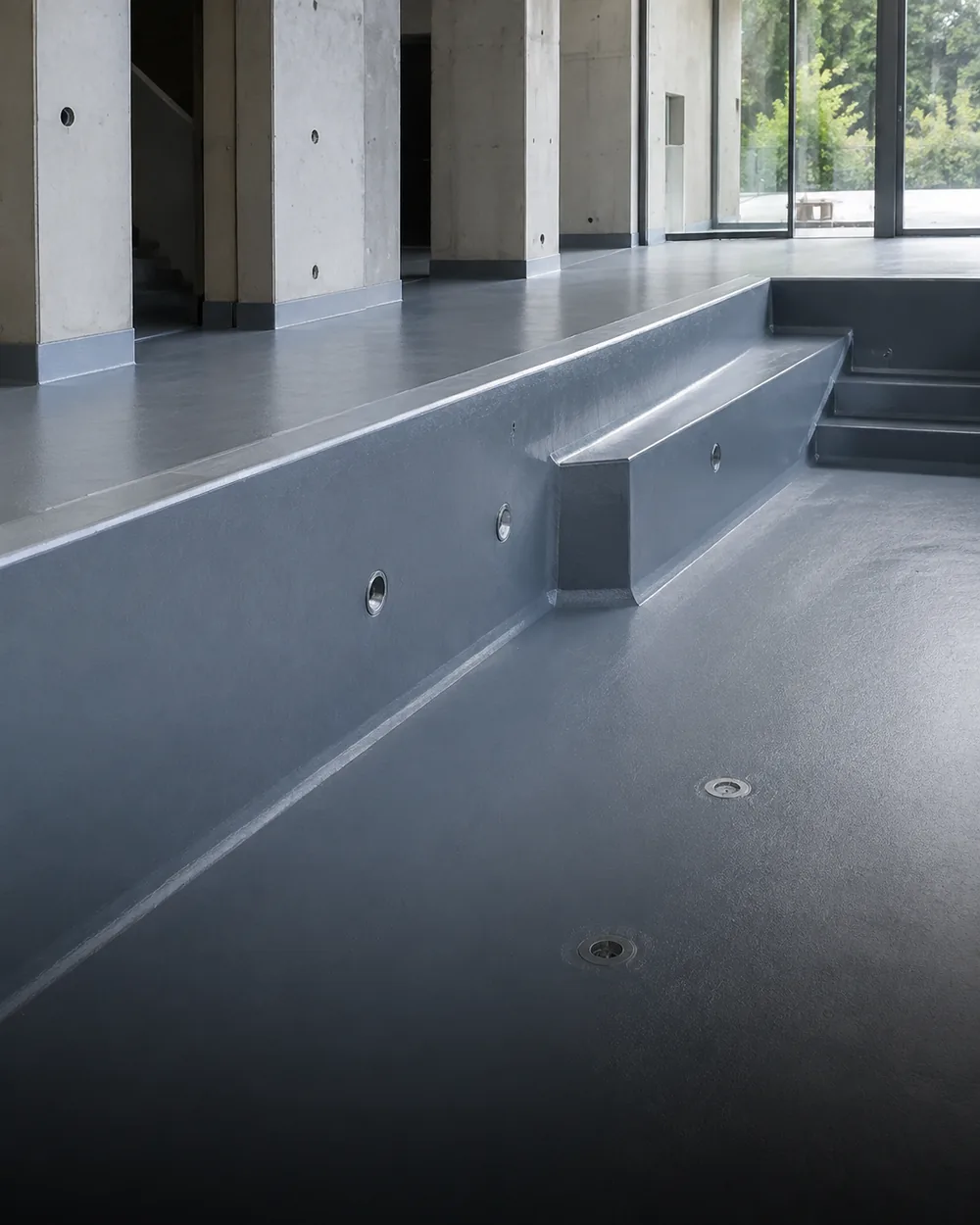
A decorative patio coating may improve appearance and wear without being the waterproof system for an occupied room below. If the patio is actually a terrace over indoor space, water management and edge details deserve particular attention. The question is larger than choosing a more durable colour coat.
A topcoat can protect another membrane, while a different assembly may rely on an exposed waterproof layer. Make that role explicit. The Huacheng Polyurea Top Coating description is a useful place to identify the product category, but the project still needs a defined build-up for its particular use.
Do not assume two proposals are equivalent because both mention polyurea. One might include a base membrane and protective topcoat; the other may use the term for a surface finish alone. The word on the quotation cannot replace a description of the work beneath the surface.
Details can matter more than the open middle
A wide open patch of concrete is often straightforward compared with the junction around a post, the front of a step, or the edge beside a sliding door. Each detail needs access and a clean termination. A patio with many interruptions may require more work than its area suggests.
Furniture sockets, railings, and drains should be identified before pricing. If they remain in place, the coating must finish around them. If they are removed, the job needs a plan for reinstatement without damaging the new surface. Deciding this late can create avoidable interruption and patching.
The proposed colour or pattern can also affect the sequence. Multiple colours, borders, and small decorative areas may require additional masking and separate stages. Decide which visual details are important to you so optional decoration does not become confused with necessary waterproofing work.
Product price and installed price are different numbers
A container price describes material supply under particular conditions. It does not include all the work necessary to produce a reliable patio. Material use also depends on surface profile, system thickness, number of layers, and ordinary application losses. Dividing a bucket price by a guessed coverage can therefore create a misleading finished-cost estimate.
A smoother surface and a rough porous surface may absorb or consume material differently during preparation and coating. The chosen system sets the required layer arrangement. Reducing material simply to meet a budget can leave a layer too thin, whereas indiscriminately adding material can create other application problems.
If you want to understand a proposal, ask which part of the cost comes from preparation, coating work, and special details. A reasonable explanation should connect the cost to visible work. It should not depend on claims that a resin is premium without explaining what that means for your actual patio.
Avoid buying speed that the site cannot support
Fast-curing technologies may shorten some coating stages, but they do not eliminate substrate assessment or repair. A damp patio, uncertain old paint, or unsuitable weather can still delay the work. A one-day promise is useful only when the site and the complete system allow that sequence.
The Covestro Pasquick technology overview discusses fast-return coating technology. Its product-specific claims are not a general timetable for every polyurea or polyaspartic patio. For your project, the meaningful dates are when each actual layer can be applied and when the finished surface can accept its intended use.
Clarify the distinction between walking carefully across the area and returning heavy furniture, planters, cleaning water, or a barbecue. Early use can damage a surface before it reaches the required cure. A cheaper programme that creates premature-use repairs is not necessarily a saving.
Decide what can be simplified without weakening the job
Some choices are negotiable: elaborate borders, decorative effects, difficult colour transitions, or coating vertical faces that are purely cosmetic. Other elements, such as necessary preparation, compatible layers, joint treatment, and specified thickness, belong to the system’s basic function. Keep that distinction clear when discussing budget.
You may also be able to clear furniture yourself or provide easier access, if the installer agrees. Such practical arrangements can reduce inconvenience and sometimes labour. They should be agreed in advance, because unsupervised surface treatment or chemical cleaning can create compatibility problems rather than help.
The best way to interpret polyurea price is to follow the work from the existing patio to the promised finish. Once scope, surface condition, details, and return-to-use conditions are visible, a price becomes something you can assess. Area is part of that assessment, but it is only one part.
Send Huacheng photos of the existing patio, its edges and steps, and the finish you want so any material discussion starts with a clear picture of the actual work.
Frequently asked questions
Why does my small patio cost more per square metre than a large floor?
Setup, protection, travel, equipment, and separate coating visits may be spread over a much smaller area. Edges and steps can also take a larger share of the work on a compact patio.
Can I compare a bucket price with an installed quotation?
Only as a material reference. The installed quotation includes preparation, labour, equipment, detailing, and the complete layer arrangement. Material coverage also needs to match the specified thickness and substrate.
Is the cheapest polyurea quotation always missing work?
No. Different businesses can price the same work differently. The sensible check is whether each quotation clearly includes the same surface preparation, repairs, layers, details, and finished-use requirements.
Will choosing a plain colour reduce the cost?
It may simplify decorative stages compared with borders or multi-colour effects. The saving depends on the job, and a simpler colour does not remove the need for suitable preparation and waterproofing details.
Should every possible repair be priced before old paint is removed?
Visible repairs can be defined in advance, but concealed defects may only become clear after removal. Agree how additional work will be assessed, recorded, and authorised so the process remains understandable.