


Polymer Modified Cement Waterproofing: Can You Add Water to Thin It?

Do not add extra water to polymer modified cement waterproofing unless the instructions for that exact product permit it. A mixture that feels easier to brush is not necessarily a better waterproof layer. Extra liquid can change the intended balance of ingredients, the thickness placed by each pass, and the way the coating cures. First establish whether you are using a powder-only product or a pre-proportioned powder-and-liquid kit.
Polyurethane Waterproof Coating for Concrete: Can the Slab Be Damp?

A polyurethane waterproof coating for concrete should only be applied when the concrete meets that exact product's moisture requirements. Moisture-cured does not mean suitable for wet concrete, and a surface that looks pale and dry may still contain moisture below it. Establish where the water comes from and how the chosen system measures readiness before coating a damp slab.
Passive Radiative Cooling Film: What Changes When Clouds Arrive?

Clouds can change passive radiative cooling film performance in two directions at once. They can reduce incoming sunlight, so the surface receives less solar heat, while also changing the thermal radiation the surface exchanges with the sky. A cooler reading under cloud does not by itself show that the film is radiating heat away more effectively.
Aerogel Battery Insulation: Why a Heat Barrier Is Not a Cooler
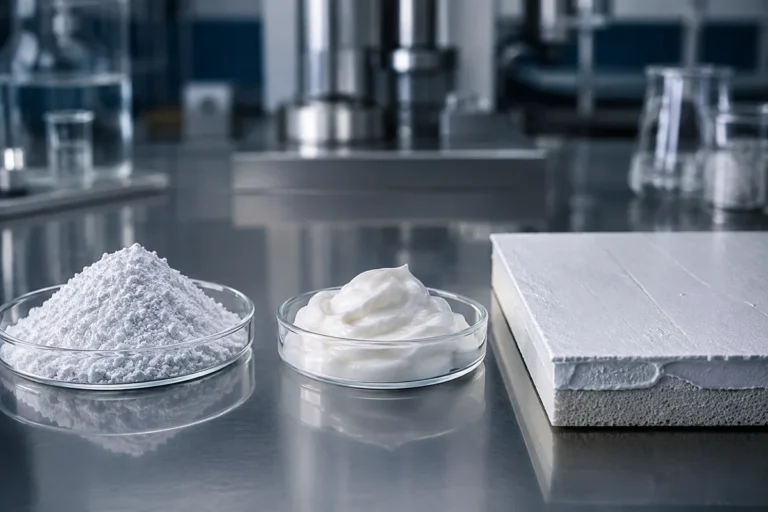
Aerogel battery insulation can slow heat crossing a selected boundary. It does not remove the heat a working battery produces. A battery system may therefore use an insulating barrier in one location and a cooling path in another. The two features have different jobs and can be designed to work together.
Polyurea Coating Tips: What Roller Lines Tell You About a Finish

Useful polyurea coating tips begin with identifying the product and the mark. A visible line may be a change in gloss, a raised overlap, a thin patch, or a boundary between batches. Those are different defects, and adding another quick coat can make some of them worse. Inspect the surface under consistent light, establish what actually changed, and follow a repair method compatible with the coating.
Polyurea Coating Applications in Utility Rooms: What Needs Protecting?

Among polyurea coating applications, utility rooms raise a useful question: are you trying to protect the floor from occasional splashes, or contain water that could escape into the building? A hard, washable finish can help with routine cleaning, but leak containment depends on the whole room, including drains, wall junctions, doorways, and penetrations. A seamless-looking floor does not automatically make the room a waterproof tray.
Polyurea Price for a Small Patio: Why Area Alone Is Misleading
Polyurea price for a small patio depends on the work needed to create the finished surface, not simply the number of square metres multiplied by a resin rate. Removing an old finish, correcting weak concrete, treating joints, and working around steps can outweigh the cost of the coating itself. A higher price per unit of area on a small patio does not automatically mean the material is overpriced.
Aerogel Acoustic Insulation: Will It Quiet the Next Room?
Aerogel acoustic insulation cannot be judged from the material name alone. A product that absorbs sound inside a room may reduce echo without substantially blocking conversation through a wall. To know whether it will quiet the next room, you need evidence for sound transmission through the proposed wall or lining, including its details.
Self Adhesive Window Film or Static Cling for a Rental?

Self adhesive window film and static cling film can both change a window's appearance or solar behavior, but they are not equally convenient to remove, store or reinstall. For a rental, choose by the actual attachment method, glazing compatibility and permission to alter the window. The phrase removable does not by itself mean reusable or free of cleanup.
Polyaspartic Pool Deck Coating: Choosing Texture for Wet Bare Feet

A polyaspartic pool deck coating needs an appropriate surface texture; the resin name alone does not tell you how it will feel or grip under wet bare feet. Around a pool, the right finish balances traction, comfort, cleaning, and drainage. A glossy showroom sample cannot answer those questions by itself, particularly when the real deck will collect splashes, sunscreen, and fine dirt.